Wednesday, 8 August 2012

Bread and Bitter ... or time to use your loaf!


Have you noticed how many "The Campaign for …" there are? Just typing in those three words bring up over a billion results … for Oxford Thinking, to Protect Rural England, for Wool, for Drawing, for Learning, for Better Transport … the first half dozen in my search results. Of course we in the pub trade all know about CAMRA and CAMRGB but one which you may not have heard of given its inception was only 2008 is the Real Bread Campaign

Courtesy of The Real Bread Campaign
Beer is widely accepted to have been in existence for over 6,000 years with the Sumerians of Mesopotamia recording a recipe some 4,000 years ago. Anthropologists, however, will tell you that somewhere between ten and fifteen thousand years ago our nomadic, hunter/gatherer ancestors stopped wandering around and settled down to grow things … among the first was wheat, from which not only beer comes, but bread.

So much for the potted history, but what has this to do with pubs? Well if you subscribe to the view (as I do) that 'sustainability & localism' are not just a post-industrial fad then the Real Bread Campaign (RBC), with its myriad of traditional millers and artisan bakers could be just the USP to differentiate your pub from those around you.

Whilst the big boys march on, gobbling up ever more of the declining pub market place and consumers are squeezed out of our pubs by a rapacious Treasury one thing that is bucking the trend has been real / craft beer and the preponderance of high quality food in pubs today.

According to RBC the definition of Real Bread is:

"Real Bread is that made without the use of processing aids or any other artificial additives"

Sound familiar? In this definition is the key to a USP that not only ties into 'real beer', 'slow food' and 'green consumerism' but also has many health benefits. From this simple starting point the Campaign finds ways to make bread "better for us, better for our communities and better for the planet. " Ways RBC suggests this can be done, include:
  • Bulk fermentation of at least four hours, preferably in the presence of sourdough bacteria
  • Made using not only roller-milled white flour (* e.g. all flour is stone-ground, or all flour is over 80% extraction rate, or bread is made using at least 50% by weight of wholemeal flour).
  • Made in one continuous process i.e. no part-baking or freezing of the dough
  • Made using at least 20% (by weight) locally milled flour (using the FARMA guideline of 30 miles being ideal and up to 50 miles for larger cities/coastal/remote towns & villages)
  • Has a salt content in line with FSA guidance - 1% or less of final product weight
  • Product is certified organic (I assume as defined by The Soil Association definition)
But I still don't get the point, what has this to do with pubs? Think about it, locally sourced, hand made and better for you than the crap we usually by from supermarkets and commercial bakeries … what's not to like? The Flour Advisory Bureau reckon 99% of UK households buy bread, 44% of men and 25% of women eat it twice a day and that 97% of bread is either bought from supermarkets and high-street bakers … what a market-place to exploit!

We all search for differentials to give our pub the edge over the competition, we all work incredibly hard to make sure our premises are welcoming, our beer bright and our food appetising … so why not add a further difference that the big boys will not take up quickly?

Just one suggestion from the RBC website for budding bakers is to approach their local pub and see if the kitchen can be used out of normal cooking sessions. Think about this one … you could rent out your kitchen (overnight or early morning perhaps) when you aren't using it and it isn’t paying for itself and you could have the added benefit of the aromas of freshly baked bread to add to your pub's 'ambience' and 'artisan' bread baked on the premises for your menu. I used a similar strategy with great success by allowing a specialist vegetarian/vegan caterer to use the pub kitchen "out of hours" - not only was part of the pub asset used to full effect but we were also able to offer high quality food to our vegetarian/vegan customers.

Studies have shown that on average 76% of money spent with local businesses is re-invested locally as opposed to only 36% re-investment by national chains, but we all know that from jobs we farm out to regular customers, such as plumbers, painters, builders etc who drink in our pubs. Not only do we often get 'mates rates' but we also see a fair amount of expenditure re-invested by those trades-persons back over the bar. Creating a sustainable partnership with a local artisan baker within your premises could provide a valuable reputational boost … so we can't all be beer and brew-houses (the tie, space or finances might preclude that) but many pubs could be beer and bake-houses with little difficulty. Even if you can't go the full hog of giving up your kitchen on a permanent basis, why not offer your facilities to a local baking group, in a return to times long ago when all the bread in the village was cooked in just one communal oven? Go one step further ... set your own group up.

Loaf in Birmingham, have become tenants of Everards the brewer, who have purchased premises for the new Loaf HQ as part of Everards’s ‘Project Artisan’ – an innovative scheme to purchase and then lease out buildings suitable for artisan food and drink businesses that need to expand, initiated by Everards after the success of their project to convert pubs for micro-breweries (Project William). Everards investment in the property means that Loaf can take on a bigger and more suitable premises than we otherwise could have done.

Increasing numbers of pub customers are what LOHAS (Lifestyles of Health and Sustainability) marketers call “drifters” who: 

         Want to choose environmentally-friendly products, but often choose ones that aren’t
         Want to do more to protect the environment, but don’t know how
         Believe that considering the environmental impact of their purchase decisions is too difficult
         Think they personally cannot make a difference

RBC taps into all of these drifter aspirations especially as an easy way for them to buy 'ethically' without having to really think about it … LocAle from CAMRA does exactly the same. Food miles, beer miles, short grain chains (RBC's version of food miles) all add to the attraction of the proposition. Mintel the market research experts say 
 "Those companies that cannot keep up with the progression of LOHAS consumer demand risk losing market share."
So full asset use, local interaction and 'green credentials' combine to provide a USP that the big boys will be loathe to emulate, not bad from something that only really requires four ingredients, flour, salt water and yeast. Check out the RBC website it has a fantastic set of resources on all things bread and more than likely will put you in touch with someone looking to bake locally.

If you need any convincing not to buy commercially produced bread take a look at this from the Gaurdian newspaper:

  Nuff said eh?

Wednesday, 1 August 2012

Sauce for the goose ...


So once the Olympic flame is extinguished, the fireworks have disappeared into the ether and TV schedules return to normal, what next for pubs? 

One area of significant growth in both the off and on-trades, bucking the trends in falling sales is Premium Bottled Ales (see the BBPA statistics for sales declines). Marston's have just published their Premium Bottled Ales Report 2012 and huge like for like, year on year growth.


So what lies beneath this rare success story in the age of double (or is it triple) dip recession? Well the first thing to note about the report is that it is aimed primarily at the off-trade and the growth in this sector is 11% in the UK (16.4% in Scotland and 80% for flavoured beers), which the authors say is due to Premium Bottled Ale (PBA) satisfying "consumer demand for authentic, crafted products" :

The greater consumer appeal for PBAs has been driven by a higher perceived level of product quality and value delivering an ‘affordable treat’, with appeal based on:
·        More taste and flavour than other beers (63%*)
·        Authentic crafted product, rather than manufactured commodity (37%*)
·        Produced by regional and local brewers rather than  multi-nationals (36%*)

*Source: Marston’s Drinker Survey Nov 2011

This has led to some 455,000 extra customers to the PBA off-trade market and a loss of 160,000 customers from the standard ale off-trade market. Surely if supermarket shoppers are switching in such great numbers it only behoves the pub trade to capitalise on these changing tastes and ensure a wide range of PBAs are available when supermarket shoppers go out for a drink, in this case familiarity does not breed contempt.

It recommends that in order to further grow the off-trade market that retailers should adopt some key strategies, which, if savvy on-trade operators were to adopt (or at least adapt) could deliver significant returns not only in terms of PBA sales but increased customer foot-fall.

The Marston's report reckons that there are £20millions of lost sales in the off-trade due to "out of stocks" - so a key recommendation pubs could adopt is to ensure that stocks reflect customer demands (although any competent on-trade operator knows this already). 

The report goes on to say that there are 10 "drive brands" that deliver 45% of total space yet only use 20% of shelf space. It recommends single facings - something a pub may not be able to do if the demand is for chilled beer - but attractive, back of bar displays of single facings might work. A pricing policy of "multi-packs" on a selected range increase the "weight of purchase" (i.e. these shoppers spend more overall)... something pubs can definitely do.

The report recommends that more shoppers (in the case of pubs customers) can be encouraged by concentrating on " flavoured and lighter, golden beer styles" that are attractive to a younger and female biased clientele. According to the report flavoured beer sales grew 57%  and golden beers grew by over 20% in 2011.

It goes on to talk about dual sited displays and such but seems to indicate that stocking key brands will "signpost" this for customers and the use of cross category linked promotions. In the case of pubs this could easily be food-matching opportunities. (The report lists the top 20 selling PBAs, including the average off-trade price to help you assess where your pricing might comfortably sit to make then sufficiently attractive to your pub customers,)

Something pubs have known about for a long time is how important engaging with customers by having staff well-trained in product knowledge and able to recommend products to customers (food matching and for the "experimenter" type customers) is to building sales. At the very least, if you don't run to a full printed PBA menu, make sure your team know what they are selling, the style of beer, the taste, the origin and use some chalk-board space to create some tasting notes/beer of the week etc.

Lastly Marston's is recommending to its off-trade retailers that they, in effect, ditch poorer performing categories and products to make way for an expected growth in the PBA market. The report's authors are of the opinion that legislative change (such as the mooted Minimum Pricing for alcohol) and tax policy (the continuance of the duty escalator) will see brewers reducing ABVs and concentrating on flavour. (The report cites market research that 40% of consumers would choose a weaker beer in the afternoons and weekday evenings.) So dig out those stock reports and make some intelligent choices about what isn't selling, have a "sale" to get rid of it and replace it with what consumers seem to want i.e. PBAs.

The supermarkets are often blamed for the decline of the pub trade, so why not cash in on all the hard work and expense the off-trade and brewers are committing to growing this sector by making sure you have a wide range of PBAs available?

Tuesday, 17 July 2012

Pots, Kettles, Carbonisation and NuMPties ...

Cover image of the Report of the Health Select Committee Report -July 19th 2012


I am grateful to the former group editor of the Publican's Morning Advertiser, Paul Charity, for reminding me of the on-going hypocrisy of the nu-MP-ties in Westminster.


In his most informative daily Propel Newsletter, he reports that:


"Midlands MP condemns booze culture in the House of Commons: MP Aidan Burley has called for an end to the “boozing, alcoholic culture” of the House of Commons. He claimed excessive drinking was encouraged by late working hours that meant MPs had to sit around waiting to take part in votes. He told The Commons: “We have a problem: the late-night, boozing, alcoholic culture of this place. That is something that is made worse by having to wait around until ten o’clock to vote.
... and opines thus:

"It’s an irony that Health Select Committee MPs are set to condemn progress by the alcohol industry in reducing excessive drinking when there’s clearly such a problem with excessive drinking among MPs themselves. Perhaps this has blinded them to the realty – drinking is reducing year-by-year in the UK but cultural norms, including a tendency to rapid drinking in this country, take a long time to re-shape, not least among middle class types working long hours in Westminster."
Surely this can't still be the case after the Speaker, John Bercow, who chairs the House of Commons Commission, the body that runs the facilities of the Commons, promulgated this at the end of April in the wake of the Eric Joyce debacle (remember the hard-drinking, Tory-head-butting nu-MP-ty for Falkirk?) : 
Alcohol policy


The Commission takes its responsibility for the welfare of those who work on the Commons Estate very seriously. Following careful consideration of the issues around alcohol consumption it agreed the following actions to promote responsible alcohol use:
· a wider range of non-alcoholic drinks and lower strength beers will be provided in catering outlets

· staff serving alcohol would receive further training and support in refusing to serve customers when necessary

· at receptions and events where alcohol was served, glasses would be topped up less frequently

· further promotion of the support available to Members and House staff by the occupational health service and the Speaker's Chaplain

· consultation to take place with the Administration Committee, the House of Lords and the Sports and Social club on the opening hours of bars on the Parliamentary Estate
... and that, folks, is what passes as a "policy" ... "further training for staff" - what, like publicans have to undertake on the basic principles of licensing law (oh, forgot Parliament only makes laws for the rest of us not themselves) ... "topped up less" - bet they'd put their hands over their collective glasses if they really had to pay for it ... which brings me on to pricing, the Commission noted that significant price increases had occurred in recent years and that bar prices were now comparable to high street pubs, not that there was much evidence of this in January when prices certainly seemed to be "deeply discounted" but perhaps things have changed since then ...

This hand-wringing, cringe-worthy display of two-faced-ness by the nuMPties puts me in mind of Grandma's admonition to us when we questioned some of her more illogical promulgations : "Do as I say, not do as I do".

This, of course, from the members-only club that brought you financial melt-downs, nose-in-the-trough expenses scandals, any number of "omni-shambles", Olympic-gate, the beer-duty escalator ... who continue to refuse to get tough with the off-trade by means of existing licensing law but will no doubt introduce minimum pricing as part of their continued tax-raids on the hospitality industry ... whilst axing august bodies such as the Alcohol Education Research Council that inform and educate on responsible drinking -get real purleeeeese!

(Today's piece has been brought to you by The Hyphen Corporation - bringing you "Joined - Up - Thinking",  for the 21st Century, a sub-division of Ellipsis plc ... "Need We Say More?")

Saturday, 14 July 2012

"Danger, Will Robinson, Danger ... " or the ubiquity of the Grim Reaper ...

A Guardian report on proposed alcohol health warning labels from the Faculty of Public Health got me thinking about the whole issue of health warnings and labelling.

Professor Lindsey Davies (President of the FPH) commented on the publication of the Science and Technology Select Committee’s Alcohol Guidelines report:  "It's critical that we turn the tide in increasing levels of alcohol consumption in the UK, which have doubled over the past 40 years. For example, the cost of treating alcohol-related ill health on the NHS was £3.3 billion in 2006 to 2007. While public health campaigns have their place, the Faculty of Public Health believes that tackling price and availability are the most effective alcohol policies to reduce alcohol-related health harm."

Apart from the outright misinformation in her statement about alcohol consumption ((for the true figure on what Britain drinks click here) ... hohum ... perhaps the FPH will now turn its attention to the motor industry ... and the toll of death, injury and misery relating to road traffic accidents. The numbers are horrific: 32,955 killed, nearly 3m injured between 2000 and 2010. This is 11 years of deaths and injuries on Britain's roads also reported the Guardian.

  • There were a total of 208,648 casualties of all severities in road accidents reported to the police, 6 per cent lower than in 2009. There were 1,850 people killed, 17 per cent lower than in 2009 and 22,660 were seriously injured, down 8 per cent. Motor vehicle traffic fell by 2 per cent over the same period.
  • The number of fatalities fell for almost all types of road user, with a fall of 21 per cent for car occupants, 19 per cent for pedestrians, 15 per cent for motorcyclists. Pedal cycle fatalities rose by 7 per cent.
  • In 2010, it is estimated that 9,700 reported casualties (5 per cent of all road casualties) occurred when someone was driving whilst over the legal alcohol limit. The provisional number of people estimated to have been killed in drink drive accidents was 250 (14 per cent of all road fatalities).
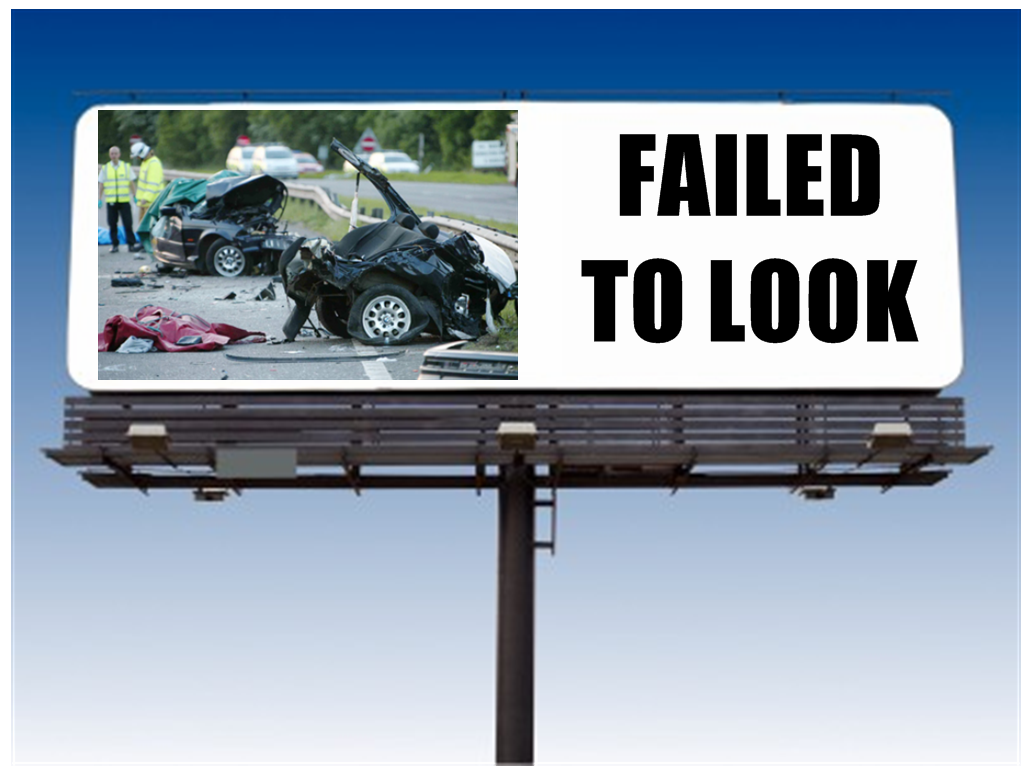
  • Failed to look properly was again the most frequently reported contributory factor and was reported in 40 per cent of all accidents reported to the police in 2010.
  • Not all non-fatal accidents are reported to the police. Our best current estimate is that the total number of road casualties in Great Britain, including those not reported to police, is within the range 660 thousand to 800 thousand with a central estimate of 730 thousand.
  • In 2010, the economic welfare cost of reported road accidents was estimated to be around £15 billion.
Let's look at a couple of those statistics as you'd expect alcohol would play a significant part, and the statistics reflect this, but a full 81% have nothing to do with alcohol ... what is staggering however is that a full 40% of casualties were caused by a failure to look. The DOT's estimated true figure for road traffic casualties of nearer 730,000 is over three times the official figures ... this would mean 292,000 "failed to look" casualties.

Latest Government Health Warning ...
On a pro rata basis the true cost to economy is probably nearer £52billions, which somewhat dwarfs the estimated £25billions alcohol related illness costs the economy as reported by the luminaries of the Alcohol Learning Centre.

So here's my proposal, all babies to be tattooed as per the picture (right) and signs akin to those below to be posted every 500m along every road ... that should just about do the trick and keep the public informed of the dangers posed by other humans and motor vehicles: 


I look forward to FHP's new campaign with baited breath ... like that's gonna happen ... Professor Davies kindly get off our backs ...


Wednesday, 11 July 2012

Undercover boss … unrepentant boss ...

Updated on 18/7/12 ... see bottom of article ...

With our industry under constant assault from the health lobby and politicians looking for populist policy opportunities, Channel Four's expose of Luminar nightclubs in its Undercover Boss series has only served to reinforce prejudices currently held about the hospitality industry.

Another satisfied Luminar customer?
The unedifying sight of comatose youngsters, pools of vomit and trashed toilets throughout the length and breadth of the country in its various venues does no favour for Luminar either. Surely this isn't what Luminar were thinking of on their website where they are proud to announce: " We strive to create memorable experiences ..."

Peter Marks, the chief executive of the nightclub group was right to be "really angry" that his customers exercised so little self-control that they ended up in such a state. Personal choices and personal responsibility have to play a significant part in such scenarios, however, as a publican of over 30 years standing I did find Mr Marks' faux anger somewhat disingenuous. 

Where are the words of admonition for the managers and DPS' of his 70 strong empire? At whose behest have his clubs been offering "3-4-1" drinks promotions? Have none of his bar staff been trained to have even a rudimentary understanding of licensing law? 

Perhaps he shouldn't leave it so long to get out and about in his estate again because lame excuses about "supermarket competition" and "it's the recession" that drives his business activities simply won't wash. Plenty of operators not only obey the letter of the law but also subscribe to the spirit of the law and don't abrogate their social responsibilities purely in pursuit of profit.

Whilst I applaud his recognition of the hard-working individuals who were high-lighted during his week behind the scenes at the country's largest nightclub group, one cannot think that his corporate responsibility hat has gone back in the wardrobe along with the awful wig he wore.  

Until the trade we all love and work in takes "personal responsibility" for its actions - irresponsible drinks promotions and in this instance blatant disregard for licensing law (allowing customers to get so drunk they are comatose and require an emergency ambulance to be called) - then the health lobby and politicians of all hues will continue to use our industry as a whipping boy. As his in-house medic commented £50 of sales for the club and £1,000 cost to the NHS can't be right. (Doesn't it say something about his venues that he has to employ in-house medics in the first instance anyway? Or is it just "good practice" these days to ensure minimal chances of legal action or licensing reviews being taken against the company and its venues?)

One thing I did notice is the preponderance of young people in his clubs … perhaps if his company developed other market segments apart from the 18-24 year olds and made his venues more attractive to older customers he might not need to resort to the lowest common denominator of Jägerbombs at two quid a pop and make a decent living out of those who know how to enjoy a night out without getting completely and utterly wasted and don't mind paying a reasonable price for the privilege … just a thought …

And in the spirit of balanced comment … was this dreadful glimpse of the "night-time economy" all down to the selective editing of the program makers to show only the shocking and "make good TV" ? Answers on a postcard please …

... an answer I didn't expect to see were these crass comments by  Peter Marks in the Publican's Morning Advertiser ... my, boil, making, blood ... in any order you like! There really is no hope for some is there?

Tuesday, 3 July 2012

And the winner is ...

And the winner is ...
As reported in the Publican's Morning Advertiser  Daniel Thwaites has very generously set a "target" for all their tenants to have an "earnings floor" of £15,000 per annum.

I thought I'd do the math on that one in light of my most recent experience at the "coal face" of the British hospitality industry.

Let's start with the myriad duties the average publican has: cooking, cleaning, serving, banking, book-keeping, training, marketing, more cleaning ...


This was my daily schedule in my last tied pub:

Monday - let staff in from 8.00 am, admin 8.30 am to 12.30 pm , 12.30 pm to 1.30pm senior staff briefings and cellar checks - rest of day and evening off - lock up at 12.30 am - total hours worked = 6

Tuesday - let staff in from 8.00 am, admin 8.30 to 9.30, kitchen 10 am to 3 pm, then again 5 pm to 10 pm, bar 10.30 to 11.30 pm, locking up again at 12.30 am - hours worked = 14

Wednesday - see in delivery at 7.00 am, then follow Tuesday pattern - hours worked = 15 (oh and check wet stock order prepared by staff for Friday delivery)

Thursday - see in delivery at 7.00 am, let staff in  at 8.00 am, admin 8.30 to 9.30, food stock check and order preparation for Friday delivery 10.00 to 11.30 am, bar 12 noon to 3 pm, then again from 7 pm to 12 midnight, lock up at 1.30 am - hours worked = 14

Friday - see in deliveries at 7.00 am, let staff in at 8.00 am, admin 8.30 to 11.30 (including AWP machine collections and change order preparation and collection) bar 12 noon to 3 pm, then again 5 pm to 12 midnight, lock up at 1.30 am (if no private function - try 2.30 am if there was one) hours worked = 16-17

Saturday - let staff in at 8.00 am, admin 8.30 to 11.30 (change order preparation and collection) bar 12 noon to 3 pm, then again 5 pm to 12 midnight, lock up at 1.30 am (if no private function - try 2.30 am if there was one) hours worked = 16-17

Sunday - let staff in 8.00 am, admin 8.30 am to 9.30 am, kitchen 10 to 4pm, then again 6pm to 9pm, then off until lock up at 12.30 am hours worked = 11.5

Total hours worked = 92.5 hours per week (minimum).

Three week's unpaid holiday a year (if I could afford either the time or the money) mostly taken as long weekends and never more than 7 days at a time. (Deduct any stock shortages and staff overtime from normal gross profit on these occasions)

Total hours worked per annum = 4,532.5.

At a minimum of £15,000 as mooted by Daniel Thwaites as their "tenant earnings floor" = £3.03 per hour. Even if you add back in the supposed benefits of living over the "shop", say at a very generous £10,000 per annum, this still only works out at £5.51.

Daniel Thwaites - National Minimum Wage is £6.08 per hour - and I can assure you that every publican in the country (and certainly in your tenanted estate) is worth more than minimum wage for their professional management of yours (and others') assets.

Try putting an earnings floor in of £45,000 - which is probably the amount your area managers earn - and you might get nearer the mark - especially when you consider the following, from their company report:

EBITDA (profit before tax etc) on 355 pubs, hotels and inns per outlet = £61,126 (so a nice earnings ratio to your "tenant earnings floor" of roughly 4:1)

£4.6 millions in "deferred tax" - down from last year's £6.1 millions though due to "tax loss" of £1.4 millions (very careless chaps!)

Now the juicy bit all you lucky Daniel Thwaites tenants on your £15,000 "earnings floor" :

 
The board paid themselves a very restrained £924,000 (as opposed to the £1,508,800 in 2011)

Highest (un-named) paid director received £345,000 - including £99,000 relocation expenses ... hmmm anyone want to "relocate" to his/her job? Can't see that anonymous director getting out of bed for more than 2.5 weeks per year at your "tenant earnings floor" rate.

Shareholders didn't do too well in 2012 either ... a loss per share of 13 pence ... nice one considering it was 8.6 pence the previous year! (Might you be questioning their remunerations this year?)

Stopped laughing yet? If you need a real laugh check out the self-serving bollocks from Daniel Thwaites when you click on the "Publican Awards 2012" button!

Come on Daniel Thwaites, get real ... if you're going to have a "floor" then make it one that is at least at minimum wage ... for a publican doing, say, 80 hours a week (sometimes a couple doing twice that) this would mean a minimum "tenant earnings floor" of £25,000 for a singleton and £50,000 for a couple ... you mean sods!

If not then keep your mean-spirited calculations to yourselves whilst you sit back and earn a fortune off the back of hard-pressed, hard-working tenants ... because we just don't want to listen to any more fat-cat bullshit ... we get enough of that from the numpties in Westminster and the crooks in The City.