Showing posts with label Alcohol Strategy. Show all posts

Wednesday, 18 September 2013

Introducing DrunksRUs...


Harold Wilson is widely attributed as saying "A week in politics is a long time" and this is never more apt than in the national conversation about alcohol and how to deal with those who use it irresponsibly, whilst not punishing those who quietly enjoy a tipple without causing society at large a huge problem.

Successive administrations have looked at the societal ills of binge-drinking, long-term alcohol abuse and the like, and have come up with various solutions, for instance, minimum pricing. With a bit of luck the issue of minimum pricing is a dead duck, although Newcastle City Council still seems to think it's a good idea by trying to introduce a licensing condition of a minimum price of 50p per unit. I think the argument against minimum pricing has been won for now and alternative strategies will be sought and promoted.

One such strategy being mooted this week by the Association of Chief Police Officers (ACPO) is the introduction of commercially run American-style "drunk tanks". Drinkers who get so intoxicated they cannot look after themselves would be cared for in holding cells until they sober up and charged for the pleasure, as well as being fined for being drunk and disorderly. Police believe a commercially run initiative would act as an extra deterrent to excessive drinking as well as freeing up officers from having to deal with late-night drunkenness. The ensuing media frenzy today in is superbly timed to coincide with the national police "week of action" during which pubs and, I trust, other alcohol retailers are "reminded" of their duties and responsibilities under the licensing law.

The suggestion has won the backing of some police and crime commissioners, who are keen to tackle alcohol-related problems and keep policing costs down. Yesterday, Adrian Lee, the chief constable of Northamptonshire and ACPO's lead on tackling alcohol problems, said:

 “I do not see why the police service or the health service should pick up the duty of care for someone who has chosen to go out and get so drunk that they cannot look after themselves. So why don’t we take them to a drunk cell owned by a commercial company and get the commercial company to look after them during the night until they are sober. When that is over we will issue them with a fixed penalty and the company will be able to charge them for their care, which would be at quite significant cost and that might be a significant deterrent.”

ACPO estimate it costs between £300 and £400 a night to hold someone in a police cell, while police can only issue a fine of up to £80 for an offence of drunk and disorderly. So there is clearly a discontinuity between the cost of dealing with this problem and the police's ability to cover their costs, in this instance it would appear crime does pay.

More than 31,000 people were given a fixed penalty for the offence last year, whilst it is not known how many of those would have been so drunk that they had to be held in a cell overnight, I'll bet there are plenty of custody suite and A&E managers who would welcome the proposal. On the cost-benefit front only 25% of fixed penalty recipients would have needed to sober up in a cell for the proposed scheme to break-even, so the economic imperative is compelling.

Another attractive element to the proposal is the principle of the "polluter pays", those who get so bladdered they cannot stand, pay for the cost of their care. Alcohol-related crime is estimated to cost the economy around £11 billion a year including £2.7 billion to the NHS alone, so anything that reduces those bills has to be welcomed.

Mr Lee added that commercially run cells might also be a safer environment for drunks because medical staff could be on hand to look after them. Sir Hugh Orde, the president of ACPO, said drunks were “very high risk” and needed checking every 15 to 30 minutes:

“It is a huge cost on staff and when one of these people tragically dies, the service is quite rightly criticised.”

The idea seems to have support from some Police and Crime Commissioners too and A Home Office spokesperson said:

“Local authorities, the police and other agencies already have a range of powers to tackle alcohol-related crime and disorder. We believe local communities are best placed to take action in response to local problems.”

I have to say the idea does seem attractive, with all the empty retail units in our high streets there would be plenty of room to covert them into DrunksRUs™, Plenty of scope for employment for custodians and medics, and the inevitable layers of management involved in any commercial enterprise. 

So who will run these commercial drunk tanks? Will it be those paragons of efficiency Group 4 or Serco who seem to run most of our "public services" these days? I can just see the adverts now:


Or could we please just deal with one of the root problems of binge-drinking, the ridiculous "pocket money" pricing by the off-trade, most notably the big supermarket chains? Jeremy Browne, the crime prevention minister, said: 


“The Government is taking a wide range of action to tackle alcohol-related crime and disorder. This includes introducing a ban on alcohol sales below the level of duty plus VAT to tackle the worst cases of very cheap and harmful drink.”

Well Mr Browne, how about getting local licensing authorities to just impose the same sort of licence conditions for off-trade licences as pubs have with regard to "responsible" drinks promotions? Or don’t you and your colleagues in government and parliament have the political balls?

Or why not just increase the cost of fixed penalty fines to a level that will deter anti-social behaviour such as being drunk and disorderly? 

Just a thought...

Thursday, 12 September 2013

I knew it was too good to be true...


Well I knew it wouldn't be too long before the current coalition government got back in to the swing of things after their summer break and the diversions of foreign policy and the economic situation lost their ability to stop ministers spouting utter nonsense.

Today, it has been reported the minister responsible for crime prevention, Jeremy Browne, has revealed the government's thinking on the future of Personal Licences having considered its extensive Alcohol Strategy consultation responses. Earlier this year it was mooted the current need to renew Personal Licences every ten years might be scrapped. Now the honourable gentleman is proposing getting rid of Personal Licences altogether.

(For those not in the know, there are two types of licence related to the sale of alcohol in the UK, the aforementioned Personal Licence ensures individuals receive adequate training to enable them to sell alcohol safely and responsibly, the second is the Premises Licence which regulates how venues such as pubs and restaurant and retail outlets such as off-licences and supermarkets are operated).

If you cast your mind back to 2003 when the current Licensing Act came into force there were, and are, four principal Licensing Objectives, to wit (and in the order they are enacted):

1.the prevention of crime and disorder
2.public safety
3.the prevention of public nuisance
4.the protection of children from harm

The minister should take note, the area of government he should be principally concerned with, the prevention of crime, is right up there at number one. Strange then, that his concern should be the 'administrative and financial burden' on businesses which sell alcohol.  This ΓΌber-nuMPty reckons the move could save businesses around £10m a year as the Government finds the personal licence system may not always be the “most targeted and proportionate way to ensure alcohol is sold responsibly, for example, all premises – from the riskiest to the quietest – must comply with the system regardless of whether it is locally appropriate or not”

So with a conservative estimate of some 100,000 premises licensed to sell alcohol the 'saving' might be £100 per business. That's just under two quid a week, hardly a financial burden and not a great amount to worry about 'saving' in the grand scheme of things. I wonder if the minister has considered the "unintended consequences" of his proposals? But what are they? 

Well, I'm glad you've asked. The consultation (into personal licensing) proposes enabling targeted, local alternatives to personal licences through locally applied conditions to premises licences.(At the moment, all alcohol sales must be authorised by a personal licence holder, who must have completed training on the risks alcohol can present if handled irresponsibly. They must also notify licensing authorities if they commit any offence which suggests they may be unsuitable as a manager at licensed premises.)

Browne said that the decision came after "extensive discussions" with the trade, police and local Government during the recent Alcohol Strategy consultation (sic) and he reckons the saving would still allow licensing authorities to keep "a focus on measures to tackle crime and disorder at licensed premises. This consultation is an opportunity for licensing authorities, the licensed trade, police officers and the general public to share their views on this proposal. In particular, the Government is seeking views on whether it would cut costs for businesses and maintain appropriate safeguards against crime and disorder at licensed premises.”

Notwithstanding the continued focus and demonisation on the on-trade I wonder if Mr Browne, has carried out a full cost-benefit analysis? I think the hospitality industry should insist one be carried out on this proposal as the switch, ten years ago, from the old Justice's Licence system to the current licensing regime cost the industry hundreds of millions of pounds to implement. Does the minister think it would cost any less to needlessly re-jig licensing arrangements again?

Going back to his ministerial brief, does the minister think removing the professional qualifications a Personal Licence holder has to hold, the training licensees have to undergo to achieve those qualifications and thence obtain their licence is going to do anything to promote the four licensing objectives? Surely if one is serious about lifting those in the pub trade from "trades (wo)man" status to that of professional practitioners who operate their businesses with the best standards of conduct and adherence to the law, then scrapping the de minimus requirements of the Personal Licence isn't going to improve the situation.

There have long been rumblings from local authorities, who are charged with administering our national alcohol laws, for them to be allowed to set their own local licensing fees as opposed to nationally imposed rates. If this ridiculous proposal comes into effect and licensing is on a local basis with the myriad of regimes this will give birth to then only one logical conclusion can be drawn and that is licensing costs will sky-rocket as cash-strapped councils seek to further "monetise" the licensing process.

And let's not stop there. Under the current regime a Personal Licence holder can pretty well work anywhere in the UK (with a few minor variations in Scotland and Northern Ireland). There is one national qualification, one national set of criteria for obtaining and retaining the Personal Licence, so how would several hundred individual licensing regimes and requirements help keep costs down, let alone protect the licensing objectives? How would this help the labour market? Surely it would lead to less flexibility for individuals and businesses alike. I think Browne's colleagues in the DWP, the Department for Business and Industry, the Treasury, Numbers 10 & 11 might have something to say if he knackers the free flow of qualified licensees around the country. Even Lord Tebbit would be hard-pressed to suggest licensees "get on their bikes" and go where the work is if these barriers to free movement of labour are imposed.

What, pray minister, is your proposal for the role of Designated Premises Supervisor (DPS) on existing Premises Licences? At present the DPS is, what under the old system was the "landlord" or "landlady", the person responsible for ensuring licensing laws are adhered to. A DPS must, for now, hold a current Personal Licence. So who will be responsible under your mad-cap proposals? A new qualification and new licence for the DPS? How will this save businesses money? Local councils will still have to administer some form of licence for those who actually sell the booze, there will still need to be a minimum level of training and there will still need to be an "examining board" to ensure only those who pass the test get a licence. Who will pay for this? Who will pay for the transitional costs? Well my guess is it'll be business and ultimately their respective customers. Will there be a refund for the thousands of Personal Licence holders for not only their licence fees but the training they underwent?

Here's another thought, under the existing arrangements the Premises Licence has been fairly well protected from the short-comings of an individual DPS in the event of a review. What protection will there be for owners such as freeholders and yes, even the dreaded pubcos, who by and large hold the Premises Licences for their pubs and bars? I for one can see the potential for huge costs for owners of licensed premises when licences are lost on the football field of local council politics and local police commissioners' re-election campaigns.

Clearly Mr Browne has not considered the consequences of these proposals, perhaps he never had a wise old grandmother to remind him that "if it ain't broke, don't fix it". Equally clear is that "joined up thinking" isn't part of the minister's vocabulary either. For, imperfect as our licensing system might be now, think how completely bollixed it'll be if the hospitality industry and the off-trade have to deal with any number of variations. I can see the likes of Tim Martin having a nervous breakdown as he tries to reconcile disparate licensing regimes to the needs of his national pub empire. And pity the poor local government officers who have to implement any changes, imagine the (wo)man hours that'll go into dismantling the current system and building a new one.

I've maintained for some time this government has a schizophrenic attitude to its Alcohol Strategy and Mr Browne's latest wheeze does nothing to change my view. And to think I was doing so well over the summer, I'd managed to reduce my intake of pills, I'd stripped the padding out of my cell and nursey even had time for a well-deserved break. Back to the drawing board on that one. Thanks a bunch Mr Browne.

Well at least I won't have to change the motto on my coat of arms as it will firmly remain " Nutrix, medicina, nunc!"

Saturday, 3 August 2013

Down The Rabbit Hole... or How I Learned To Love Irony

I'm not sure if it's the continuing high level of humidity, the increased levels of Vitamin D in my system from recent sunny days, the lack of sleep due to stifling nights, the side-effects of the anti-histamines I'm taking to ward off hay-fever or maybe it's just a combination of all of them, but I was struck by two announcements this week, one from HMG and one from Tesco. They have left me feeling somewhat divorced from reality and I am feeling as confused as Alice after her vertiginous descent as she dealt with the murderous Red Queen and the manic Mad Hatter and his tea party.


The former, in the guise of Home Office Minister Lord Taylor of Holbeach who released figures in the House of Lords that reveal that almost all the major supermarkets are selling large volumes of alcohol below cost; the latter masquerading as Tesco's UK Managing Director announcing plans for the "evolution" of its larger stores and hints this could be rolled out to its smaller "convenience" stores.

But any way back to the Red Queens' government's comments on findings in the latest available figures (for 2008) that 6 out of 7 supermarkets sold alcohol below cost, with a total of over 220 million litres of alcohol sold below cost price, ALMR Strategic Affairs Director, Kate Nicholls said:

“The Government’s admission of the scale of below cost selling and supermarket irresponsibility when it comes to pricing clearly demonstrates the need for swift, tough and effective action not only to tackle pocket money prices but to impose the same regulation of promotional activity in the off-trade as pubs, clubs and bars currently face.”

The problem was further emphasised with the release of the Smoking, Drinking and Drug Use Among Young People Survey (published 25th July), which shows that a quarter of underage drinkers bought alcohol from a shop, supermarket or off-licence and almost 40% got it from friends or relatives at home, with the majority of these purchases also likely to be from shops and supermarkets. This compares to 1% of young people who had obtained their alcohol from pubs. Responding to these findings, Nicholls said:

“With more than 70% of alcohol now consumed away from the safe, supervised environment of a pub or bar – and the latest research showing two thirds of consumers citing price as the main factor behind that – the time for government action is now. We cannot go on allowing a tide of cheap alcohol to undermine the good work responsible pub and bar operators are doing to deliver the Government’s public health and public order agenda.”

So the Red Queen government recognises the culpability of the off-trade's irresponsible alcohol retailing policies in society's relationship with alcohol and it admits pubs are, by far, more responsible in terms of under-age drinking at the very least. Both sets of figures (below cost retailing and where 11-15 year olds obtain alcohol) have been available since they came to office yet still no action is taken against retail giants such as the Mad Hatter Tesco. Fair enough, I hear you say, but these things take time, there were other priorities, we can't be anti-business...

You'll understand why I find a certain amount of bewilderment in the Red Queen government ministers decrying pubs on the one hand whilst on the other hand recognising, as does Lord Taylor, that perhaps we should be looking more closely at the off-trade. However, this is just the normal schizophrenic attitude this administration has to its 'alcohol strategy' and is not the true source of my Carrollian confusion, for this lies in the Mad Hatter's Tesco's business plans.

The Mad Hatter Tesco's MD has spoken this week of "retail destinations that are exciting, relevant and convenient”, Chris Bush told 'The Grocer' magazine the company wants to create destinations that would mean shoppers can visit a yoga class, pop into the dry cleaner’s, get their hair or nails done, or enjoy a meal, all in the same retail space. Bush said food courts were an “important part” of the company’s plans, with fresh food, coffee shops, and fast food options part of the offer. (I'll bet they are!)

Don't forget, of course, in two days the Mad Hatter Tesco opens a 'Giraffe Restaurant' at its Watford Extra store, with plans to open ten in total this year - and a new carvery-style concept the same day in Coventry. Bush hints at the rationale behind the retail giant's recent acquisition of the 'Giraffe' brand and his company's road map:

“In the past, large hypermarkets were popular because they offered a massive range of products and people liked being able to buy everything under one roof – it made life easier. The internet has changed all that - people don’t even need to leave their homes to go shopping and more people are using convenience stores for regular top-up shops. Our customers pay to put fuel into their car and drive away from their homes to visit us, so we need to give them good reasons to come to our larger stores.”

Mind you he's only echoing earlier comments this year from the White Rabbit his commercial director, Kevin Grace:

“We’ve been doing a lot of thinking about retail destinations and how our stores might become somewhere that people spend more time, as well as shop. With more general merchandise moving online, we have a great opportunity to rethink how we use the space in some of our larger stores. To put some of that thinking into context, it might be useful to think about the many different shopping malls around the world. In most cases, their food concepts are excellent and it’s one of the main reasons people go there."

On the same day as the Mad Hatter Tesco opens its first Giraffe Restaurant it will launch a new casual dining concept called "Decks" at its Arena Shopping Park site in Coventry and is planning to use spare space at its sites to install community rooms. "Decks", part of The Mad Hatter Tesco Family Dining Division, will feature carvery style decks – with hosts manning different serving stations. 'Decks' will offer “classic British favourites, from breakfasts and roasts to crumbly cakes served with a proper cuppa”. A job advert states: 

“Our food is on display and so is our kitchen team. Serving as a “Deck Host” means chatting, recommending to guests and carving fresh roasts. Behind the scenes is different as our “support chefs” are working at pace backing the deck, and that means clean plates and fresh food.”

And the architect of these abominations? Former Mitchells & Butlers chief executive Adam Fowle who has been advising the supermarket chain on its strategy to develop the Mad Hatter's Tesco’s portfolio of food and drink brands (which already included includes Harris+Hoole coffee shops and the Euphorium Bakery concept).

Meanwhile, the first "community room", which will be available for yoga classes, music lessons and birthday parties. The 600 square foot room in Coventry will be available free of charge and include tea and coffee-making facilities. The community room is similar to initiatives the Mad Hatter Tesco already runs in some of its stores in Thailand (run previously, yep you got it, by their newly appointed UK Managing Director).

I have a question to pose to those who will inevitably have to administer  the Mad Hatter's Tea Party Tesco premises licence under the 2003 licensing act: "How will you reconcile responsible retailing practice within the on-trade element of Tesco's premises with their irresponsible approach to selling alcohol in its off-trade sector, especially if they're contained within the same premises?"

Will you a) relax your approach to Tesco's retailing in its on-trade department or b) impose the same strict standards to its off-trade counter?  Or as Jeremy Browne might have it,  will Tesco's on-trade adventure fall within the category of "community premises", which will have less onerous licensing provisions of "low alcohol sales"?

A "virtuous" circle has now been formed... the pubcos labouring under mountainous debts divest themselves of "unsustainable pubs" run by "bad landlords"... these pubs are snapped up by mega-grocers... the government and local licensing authorities continue to turn a blind-eye to irresponsible alcohol retailing by the grocers... more people shop online with the grocers... drink more at home... and when they do eventually get their respective bums of their sofas and go out for a drink or meal they go to one of the grocers' hybrid on/off trade premises... fewer people use their local community pubs... more pubs are declared "unsustainable" by the pubcos... and there you have it, what my business dictionary describes as:
"A self-propagating advantageous situation in which a successful solution leads to more of a desired result or another success which generates still more desired results or successes in a chain"


And who said irony was dead?

Tuesday, 23 July 2013

One step forward, two steps back...

You'll have noticed a reduced output on this blog of late as I have been experiencing a little "writer's block". I'm not sure I can pin down the reason, maybe it's because I've been busy on a couple of other projects, maybe due to the lethargy brought on by the inexorable rise of the mercury in thermometers across the land, or maybe I've realised the absurdities of 'the system' under which we all live. Whatever the reason, last night's thunderstorms have reduced the temperature and the rain has perked the garden and me up a little, so here goes with enough words to make up for my recent taciturnity.

Like a famous film poster read, "just when you thought it was safe to go back into the water", I read with dismay HMG's latest tortuous squirming in the wake of its decision to scrap minimum pricing for alcohol and the latest 'research' into the effects of alcohol on young women. The pub industry, on the one hand the cause celebre of MPs across the party divide, with a modest reduction in beer duty, a consultation into pubco reforms and the temporary abandonment of minimum pricing for alcohol, is yet again under headline grabbing attack from its new found friends in government and long-standing enemies in the 'health lobby'.

Firstly, in a ministerial statement to the House of Commons, Government Minister Jeremy Browne sets out HMG's position on minimum pricing but also took the opportunity of mentioning other measures which will be implemented and those that are under consideration:

Whilst minimum pricing will be kept under review it will not be implemented at present although the indication is that there will be a ban on alcohol sold for less than cost plus VAT. In addition, ‘multi packs' will not be banned. Although it's worth noting Kate Nicholls' (strategic affairs director at the Association of Licensed Multiple Retailers) comment:
"We are extremely disappointed that the Government has not grasped the nettle and taken meaningful action to stop the sale of pocket money priced alcohol and irresponsible promotions in the off trade which are together fuelling unsupervised consumption and contributing to alcohol related harms."
In line with there being no blanket minimum pricing per unit there will be a concentration of action in what the minister described as "high harm" areas of the country and an emphasis on giving more powers to enable "tougher action on irresponsible promotions in pubs and clubs"; 
Browne, the minister of state for crime prevention no less, also hinted at some areas of relaxation to alcohol retailing under the banner of reducing red tape and regulation:
  • making it easier for what are described as community premises to get a licence for low level alcohol sales
  • changes to the Temporary Event Notice restrictions to increase the numbers of Notices available
  • indication that the requirement to renew personal licences will be removed but also trailed for consultation is the possibility of the outright removal of the requirement for personal licences.
and secondly, the Glasgow Centre for Population Health in its research paper- "Alcohol-related mortality in deprived UK cities:worrying trends in young women challenge recent national downward trends", by Deborah Shipton, Bruce Whyte, David Walsh. (You can wade through the plethora of data and charts here.)

The latter is easier for me to deal with, as having no grounding in mortality statistics or public health the majority of this peer reviewed eight page paper, is somewhat lost on me. However, the abstract states:
"Glasgow, the largest city in Scotland, has high levels of deprivation and a poor health profile compared with other parts of Europe, which cannot be fully explained by the high levels of deprivation. The excess, premature mortality in Glasgow is now largely attributable to deaths from alcohol, drugs, suicide and violence."
You'll note the attribution to causes other than alcohol, yet when a layman such as myself attempts to make sense of the statistical data presented it seems strange the other causes of death mentioned above are not given the special emphasis the report gives to the 'demon drink'. 

Whilst I praise the authors for bringing to wider attention the apparent disparity in mortality rates for women born between 1970 and 1979 in not only Glasgow but also Manchester and Liverpool, which it seems to blame entirely on their drinking habits, from which the popular and trade press have drawn their headlines, I can't help but think they have been somewhat selective in what they choose to concentrate on. 

But if you dig a little deeper into the dry prose of this troika of public health analysts you'll come across this little gem:

"The shifting landscape of the excess mortality in Scotland, originally from cardiovascular disease and ischaemic heart disease and now to alcohol, drugs, suicide and violence, points to deep-rooted societal level factors driving the excess poor health in Scotland; the recent rise in alcohol-related deaths is likely to be a symptom of these wider societal-level influences. 

Tackling the alcohol-specific causes of the poor health in Glasgow, although important, alone is unlikely to improve the health of those in Glasgow"
It goes on, of course, to recommend minimum pricing and no doubt the statistical analysis and the "manipulated dataset" the authors used will bolster the Scottish government's ongoing experiment with minimum pricing. This despite finding:

"A marked increase in alcohol-related deaths, beginning in 1993, was seen in Glasgow, and to a lesser extent in other parts of Scotland. This stepped increase is in contrast with the picture in both Manchester and Liverpool where the increase was largely linear across the three decades. 

In all three cities, however, the alcohol-related death rate stabilised in the early 2000s, with some decrease seen in the late 2000s. In Glasgow this fall was greater, in absolute and relative terms, than in the other two cities"
It is only the "birth cohort" of women from 1970-1979 that buck the trend (also being experienced across the country) and cause the authors such concern to such an extent, that in all the eight pages of analysis the other causes of mortality in their abstract are mentioned a scant four times and always in the context of this being a more significant factor in mortality rates than alcohol.

So one question for all the media darlings and neo-prohibitionists out there who jumped on this latest tumbril - "Why not take up the scourge of drugs, violence and suicide that appears to be the real problem for the majority of the populations of Glasgow, Manchester and Liverpool?" Could it be, for the former, selling newspapers and filling column inches with sensational findings is a little easier than getting to the truth about greater societal ills; for the latter it's their usual tactic of selectively extracting "data" from others' work and spinning it to their relentless demonisation of social drinkers.

Either way, which bit didn't you get? I mean, the clue was in the title you dolts... "recent national downward trends" ! No trumpeting of flat-lining or reducing mortality rates attributed to alcohol then?

Now we can return to Mr Browne and his concentration on "high harm areas" of the country... here's a suggestion for a starting point... Glasgow, Manchester and Liverpool. But not for some localised version of minimum pricing but for some action on the societal results of deprivation brought on by drugs and the violence and suicides so prevalent in these cities. 

Oh and whilst you're at it how about including the off-trade in your promulgations from time to time, why are pubs and clubs singled out, yet again, for "tougher action on irresponsible promotions". Time and time again lazy politicians and their journalist friends trot out the same line "it's the pubs what's to blame governor" whilst conveniently forgetting the mayhem caused by 'pocket money pricing' in the off-trade.

As I've said before the current coalition administration seems to have developed a schizophrenic approach to its alcohol strategy, on the one hand a clampdown on the minority of irresponsible retailers in the on-trade, is coupled with turning a continued blind eye to the off-trade and is now compounded with proposals to relax how alcohol is sold.

Make your mind up man! How is making it easier to get premises licences for "low level alcohol sales" (whatever they're meant to be)  in "community premises" (village halls and the likes) are going to help tackle society's relationship with booze? So along with a two-tier health service we're now to have a two-tier licensed retail sector, with some operators constrained by increased regulation and scrutiny and others allowed to enter the market place with the minimum of fuss.

Whilst the on-trade will welcome the increase in the number of Temporary Event Notices it can serve on licensing authorities, how is increasing the number of potential events where alcohol can be served be reconciled with the usual mantra that "24 hour licensing" has been such a disaster for public health?

And the clincher? One of the most progressive measures introduced by the Licensing Act 2003 was to differentiate between the suitability of premises to have an alcohol licence (the premises licence) and the suitability of individuals to serve alcohol and run licensed premises (the personal licence). The former being a static licence which relevant authorities control by means of operating statements, licensing conditions etc hardwired into the way the premises are maintained and operated by their owners; the latter being a deminimus permit resulting from training, examination and certification designed to ensure professional standards in alcohol retailing.

So, Mr Browne, how does removing the necessity to renew ones personal licence or even the scrapping of the personal licence going to promote the responsible sale of alcohol and management of licensed premises? Instead of tinkering with the provisions of the Licensing Act, why not make sure local licensing authorities apply an even hand between on and off-trade and start reviewing the licences of those in the off-trade who continue to flout not only the spirit but the word of the law? 

And you wonder why I'm lost for words at times? Anyway I'll sign off with the tag-line from another favourite film... "in space no one can hear you scream"... nor in my little padded cell... 

Nurse! Meds! Stat!

Wednesday, 8 May 2013

Not The Queen's Speech ...

The pomp and circumstance of the state opening of Parliament by The Queen may seem anachronistic but it does give 'Joe Public' an intimation of what Her Majesty's Government is going to be springing on us in the not to distant future.

More importantly it's what's not in the speech that can sometimes matter ... 
"Just because something is not in the Queen's speech does not mean the government can't bring it forward as law, but we have not made a decision,"
(In an interview on the Today program on BBC Radio Four, with the wonderfully combative John Humphrys, touching on minimum pricing for alcohol, Jeremy Hunt esteemed Secretary for Health stressed that no final decisions had been taken).


Perhaps it's because of propoganda from the health lobby such as this Guardian newspaper report in which it's claimed by researchers in Canada that minimum pricing reduces alcohol harms and hospital admissions; something neo-prohibitionsists have been touting for a long time.

Interesting then to see this response from Miles Beale of the Wine and Spirit Trade Association

"The Institute of Alcohol Studies claims evidence from Canada shows minimum unit pricing for alcohol brings significant health benefits. Using their own estimates of population attributable fractions, researchers in British Columbia say between 2002 and 2009 a 10% increase in average minimum price was associated with a 32% fall in alcohol-related deaths. But actual hospital records show that the number of alcohol-related deaths in British Colombia in that period went up – from 1,073 to 1,169."
"There is another problem. One state, Alberta, does not have controls on the sale of alcohol, but shows no discernible difference in drinking patterns and health harms compared with the rest of Canada. This shows there is no simple link between alcohol price and harm, and that cultural factors are the most likely indicators of consumption patterns"

Dr Perry Kendall, British Columbia's provincial health officer, makes this damning acknowledgement that provincial governments in Canada have introduced a minimum price  for alcohol:
"mainly to bring in money rather than to protect public health". 
It simply won't do for mainstream media to perpetuate the myth that minimum pricing for alcohol is the panacea for the societal problems of alcohol (mis)use ... so my hat's off to Mr Beale for pointing this out. 

Pubs, as responsible retailers, have huge restrictions put on them regarding promotional pricing etc, yet the off-trade (principally the major supermarket chains) are allowed free rein to peddle 'pocket-money' priced booze. 

Surely the myths, half-truths and sometimes outright falsehoods trotted out by the health lobby mustn't be allowed to influence politicians to introduce minimum pricing in England & Wales, if they do it won't be pubs that benefit (after all we're already pricing well above the mooted 45p per unit), not will it be brewers. It will only be the likes of supermarkets that benefit from this multi-billion pound windfall.

You can bet your bottom dollar they won't be using any such government largesse to fund alcohol awareness programs, reduce the price of healthy food options, introduce a living wage for their employees languishing on minimum wages or pay increased tax revenues for the Treasury it their accountants have anything to do with it.

I know it's only Wednesday but ... Nurse! Meds! Stat!

Monday, 22 October 2012

Less is more ...

No chance of that with the current administration ... minimum pricing, late night levies, duty escalator, business rates revaluation freeze ... and a Chancellor that does not appear to understand the basic economic principles of 'inelastic demand' and the law of diminishing returns as demonstrated in The Laffer Curve.

Apart from fascinating research by those interested in the societal impact of alcohol consumption, such as the University of Sheffield, little seems to have influenced the political debate, however, a new report by the Institute of Economic Affairs, Drinking in the Shadow Economy, may change that. 


Perhaps a helpful civil servant will slip it into Georgie Porgie's red box ... and maybe he will then take notice of what many of us in the hospitality and brewing industries have been saying for sometime. That the third highest rate of duty (let alone other direct, indirect, and pseudo-taxation) is counter-productive:
"How do we explain the apparent lack of association between affordability and consumption? Demand for alcohol is relatively inelastic and drinkers have a series of options in front of them when real prices increase. They can do as the government hopes and drink less, but they can also do any of the following: (1) make savings elsewhere in the household budget, (2) switch from the on-trade to the off-trade, (3) downshift to cheaper drinks, (4) shop abroad, (5) brew or distil their own alcohol, (6) buy counterfeit or smuggled alcohol, and finally (7) buy surrogate alcohol (e.g. methanol, antifreeze, aftershave). The extent to which consumption patterns change depends on personal income and the price of drink. There is little doubt that financial considerations have helped shift drinking from the pub to the home in countries such as Britain,"
(above from the IAE's report)

 ... in short we Brits like a tipple and 'nudge economics' or crippling taxation won't curb that desire.

How much will the cost be of this country's punitive alcohol taxation regime?
"Contrary to temperance rhetoric, high alcohol taxes are not necessarily good for public health
because, although excessive alcohol consumption undoubtedly carries risks to health, so too
does moonshine. Counterfeit spirits and surrogate alcohol frequently contain dangerous levels of
methanol, isopropanol and other chemicals which cause toxic hepatitis, blindness and death. These are the unintended consequences one associates with prohibition, albeit at a less intense level than was seen in America in the 1920s.
It scarcely matters to the politician whether unrecorded alcohol comes from legal or illegal sources.In either case, the treasury loses out on revenue. In Britain, HMRC estimates that the alcohol tax gapcould be as much as £1.2 billion per annum, plus the costs of enforcement, and that this is largely because ‘duty rates on alcohol are far higher in the UK than in mainland Europe’ (National Audit Office, 2012: 2, 10). This is the price the state must pay for excessive taxation, but the politician is also aware that these high alcohol taxes raise £9 billion a year (Collis, 2010: 3). Being in possession of these facts he may conclude that reducing the illicit alcohol supply through tax cuts will probably reduce net alcohol tax revenues.
We argue that such a focus on maximising tax revenues is short-sighted and carries significant risks. Failing to deal with alcohol’s shadow economy threatens not only the public finances, but also public health and public order. Unrecorded alcohol has, as( Nordlund and Γ–sterberg note, ‘the potential to lead to political, social and economic problems’ (Nordlund, 2000: S562). In addition to the health hazards presented by unregulated spirits, alcohol fraud in the UK is, according to the HMRC, ‘perpetrated by organised criminal gangs smuggling alcohol into the UK in large commercial quantities’ (HMRC, 2012: 8). Alcohol smuggling and counterfeiting is linked to other illegal activities, including drug smuggling, prostitution, violence, money-laundering and - in a few instances -terrorism."
(ibid - my highlights)

How about that then? Is this litany of criminality a "price worth paying"? The IEA certainly don't think so ...
 "It is too early to say whether the recent well-publicised cases of large-scale illegal alcohol production in the UK represent a lasting shift towards a Moonshine Britain, but it may not be a coincidence that they have come to light at a time when regulated alcohol has become less affordable as a result of successive tax rises and a major recession. Policy-makers should take the threat of illicit production seriously when considering alcohol pricing in the future."
 (ibid - my highlights)

But then again when has reason & research ever been so outweighed by rhetoric and dogma than with the current government?  Perhaps a little less demonisation of the ordinary drinker might lead to more positive results than a temporarily bulging Treasury ... it would appear (from this, albeit somewhat subjective discussion document) that more taxation will lead to more unintended consequences both in terms of public health and public order. I know which I would prefer ...

Thursday, 23 August 2012

How To Get It Completely Wrong ...

On Tuesday, I read in the Publican's Morning Advertiser, that Greene King was in support of minimum pricing (and my thoughts on that are well documented here and elsewhere) proving that dis-jointed thinking is not the sole reserve of the nuMPties in Westminster ... apart from the premise that minimum pricing won't be the magic bullet to cure all Society's alcohol related problems, it is just another 'stealth tax' that will deepen the problems of the brewing industry and the pub trade. What really got my goat, aside from the staggering naivety of this major player in the UK hospitality industry, was that they think that minimum pricing is a "supportive measure" for them, their colleagues in brewing, their customers in the pub trade and their own managed house business.

Yesterday, I read in that same august journal, that Adnams have a fairly peculiar view on the beer duty escalator, in that whilst they think the escalator is a bad thing, they also think that the £200,000 duty subsidy that micro-brewers receive is a bad thing too.

Call me a conspiracy nut if you like, but is this the beginnings of a concerted effort by national and regional brewers to squeeze the little guy out of the market? Imagine a couple of years down the line when not only is there an escalator for beer duty, but also one for minimum pricing and as a hard-pressed Chancellor looks at every more 'imaginative' ways to chase his holy grail (deficit reduction) that the subsidies to a still emerging sector of the brewing industry gets cut off at the knees by reducing, or even completely removing, the duty subsidy for micro-brewers.

For these small artisan brewers who have contributed so much to the increase in the cask and craft ale market (both on and off trade) and are widely recognised as being the saviour of a good proportion of the dwindling national estate of pubs, this will be the perfect storm. Reduced or zero duty subsidy will mean inevitable price rises at their, albeit tiny, factory gates or as will be more likely another unsustainable cost that they simply cannot absorb and go belly up.

Oh and don't imagine for a moment that the big pubcos or supermarkets will move an inch on their purchasing prices to help these minnows of the brewing world, they'll be more than happy to carry on gouging prices at their goods inwards gates. The former will simply pass the cost on and the latter will happily absorb the minute amount of extra duty that minimum pricing will add to their retail prices.

Give it a couple of years and the staggering exponential growth in local brewers producing interesting beers will falter and within a couple more we'll be back to the position we were in a few years ago where instead of over a thousand brewers in the country they'll be just a couple of hundred, churning out mass-produced and in some cases undrinkable muck. So much for the precious 'free market' and the choice it brings consumers.

So Greene King et al, get your act sorted, put aside commercial rivalry (between your super-sized companies and the tiny entrepreneurs in your industry) and use the considerable economic and political clout you have to tell this (and future) administrations that enough is enough and to stop screwing up brewing and the vital social institutions that they supply. Or it won't just be Quentin Letts on Radio 4 asking "What's the point of pubs?" it will be the very people who need them as one of the most socially cohesive businesses in the UK who are asking what's the point?

As the premise of the program is that more and more pubs are like restaurants anyway (and a jolly good listen it is too) many pub operators might begin to ask the same question themselves. Especially when you learn that Mitchell & Butlers are in the process of rolling out even more 'take-away' food operations in its bid to dominate out of home dining and, it would appear, the take-out market.  Which will see the demise of even more pubs as greater numbers 'squeezed' consumers resort to tucking into an M&B take-away "gourmet burger" and sup on that minimum priced can of lout, whilst watching that other great knackerer of the the pub industry (Sky) showing over-paid, mediocre prima-donna, 'professional' footballers take time out from their inane Tweets to dive at the ground ... talk about dystopian future.

No wonder that so many young adults (18-24 apparently) wouldn't consider a career in hospitality ... who would invest their time and energy in an industry that not only appears to be in terminal decline but also at war with itself? ... and I was feeling so good after the Olympics ...now if nurse would kindly bring me my medication and prevent my head from exploding ...

Tuesday, 17 July 2012

Pots, Kettles, Carbonisation and NuMPties ...

Cover image of the Report of the Health Select Committee Report -July 19th 2012


I am grateful to the former group editor of the Publican's Morning Advertiser, Paul Charity, for reminding me of the on-going hypocrisy of the nu-MP-ties in Westminster.


In his most informative daily Propel Newsletter, he reports that:


"Midlands MP condemns booze culture in the House of Commons: MP Aidan Burley has called for an end to the “boozing, alcoholic culture” of the House of Commons. He claimed excessive drinking was encouraged by late working hours that meant MPs had to sit around waiting to take part in votes. He told The Commons: “We have a problem: the late-night, boozing, alcoholic culture of this place. That is something that is made worse by having to wait around until ten o’clock to vote.”
... and opines thus:

"It’s an irony that Health Select Committee MPs are set to condemn progress by the alcohol industry in reducing excessive drinking when there’s clearly such a problem with excessive drinking among MPs themselves. Perhaps this has blinded them to the realty – drinking is reducing year-by-year in the UK but cultural norms, including a tendency to rapid drinking in this country, take a long time to re-shape, not least among middle class types working long hours in Westminster."
Surely this can't still be the case after the Speaker, John Bercow, who chairs the House of Commons Commission, the body that runs the facilities of the Commons, promulgated this at the end of April in the wake of the Eric Joyce debacle (remember the hard-drinking, Tory-head-butting nu-MP-ty for Falkirk?) : 
Alcohol policy


The Commission takes its responsibility for the welfare of those who work on the Commons Estate very seriously. Following careful consideration of the issues around alcohol consumption it agreed the following actions to promote responsible alcohol use:
· a wider range of non-alcoholic drinks and lower strength beers will be provided in catering outlets

· staff serving alcohol would receive further training and support in refusing to serve customers when necessary

· at receptions and events where alcohol was served, glasses would be topped up less frequently

· further promotion of the support available to Members and House staff by the occupational health service and the Speaker's Chaplain

· consultation to take place with the Administration Committee, the House of Lords and the Sports and Social club on the opening hours of bars on the Parliamentary Estate
... and that, folks, is what passes as a "policy" ... "further training for staff" - what, like publicans have to undertake on the basic principles of licensing law (oh, forgot Parliament only makes laws for the rest of us not themselves) ... "topped up less" - bet they'd put their hands over their collective glasses if they really had to pay for it ... which brings me on to pricing, the Commission noted that significant price increases had occurred in recent years and that bar prices were now comparable to high street pubs, not that there was much evidence of this in January when prices certainly seemed to be "deeply discounted" but perhaps things have changed since then ...

This hand-wringing, cringe-worthy display of two-faced-ness by the nuMPties puts me in mind of Grandma's admonition to us when we questioned some of her more illogical promulgations : "Do as I say, not do as I do".

This, of course, from the members-only club that brought you financial melt-downs, nose-in-the-trough expenses scandals, any number of "omni-shambles", Olympic-gate, the beer-duty escalator ... who continue to refuse to get tough with the off-trade by means of existing licensing law but will no doubt introduce minimum pricing as part of their continued tax-raids on the hospitality industry ... whilst axing august bodies such as the Alcohol Education Research Council that inform and educate on responsible drinking -get real purleeeeese!

(Today's piece has been brought to you by The Hyphen Corporation - bringing you "Joined - Up - Thinking",  for the 21st Century, a sub-division of Ellipsis plc ... "Need We Say More?")

Saturday, 14 July 2012

"Danger, Will Robinson, Danger ... " or the ubiquity of the Grim Reaper ...

A Guardian report on proposed alcohol health warning labels from the Faculty of Public Health got me thinking about the whole issue of health warnings and labelling.

Professor Lindsey Davies (President of the FPH) commented on the publication of the Science and Technology Select Committee’s Alcohol Guidelines report:  "It's critical that we turn the tide in increasing levels of alcohol consumption in the UK, which have doubled over the past 40 years. For example, the cost of treating alcohol-related ill health on the NHS was £3.3 billion in 2006 to 2007. While public health campaigns have their place, the Faculty of Public Health believes that tackling price and availability are the most effective alcohol policies to reduce alcohol-related health harm."

Apart from the outright misinformation in her statement about alcohol consumption ((for the true figure on what Britain drinks click here) ... hohum ... perhaps the FPH will now turn its attention to the motor industry ... and the toll of death, injury and misery relating to road traffic accidents. The numbers are horrific: 32,955 killed, nearly 3m injured between 2000 and 2010. This is 11 years of deaths and injuries on Britain's roads also reported the Guardian.

  • There were a total of 208,648 casualties of all severities in road accidents reported to the police, 6 per cent lower than in 2009. There were 1,850 people killed, 17 per cent lower than in 2009 and 22,660 were seriously injured, down 8 per cent. Motor vehicle traffic fell by 2 per cent over the same period.
  • The number of fatalities fell for almost all types of road user, with a fall of 21 per cent for car occupants, 19 per cent for pedestrians, 15 per cent for motorcyclists. Pedal cycle fatalities rose by 7 per cent.
  • In 2010, it is estimated that 9,700 reported casualties (5 per cent of all road casualties) occurred when someone was driving whilst over the legal alcohol limit. The provisional number of people estimated to have been killed in drink drive accidents was 250 (14 per cent of all road fatalities).
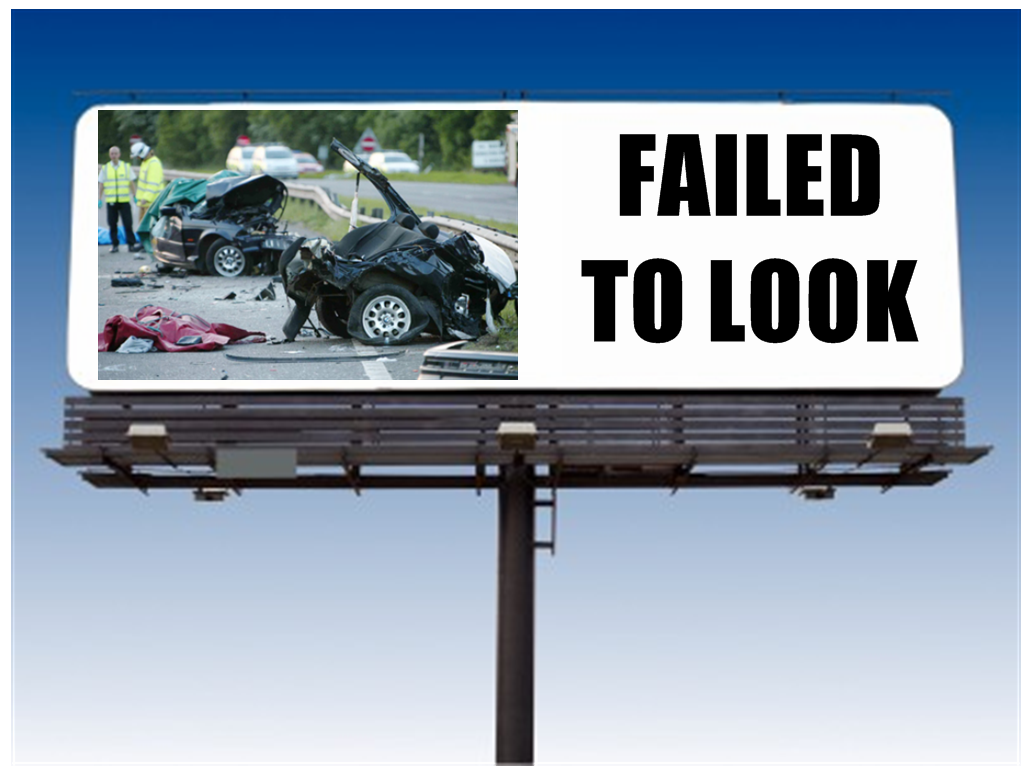
  • Failed to look properly was again the most frequently reported contributory factor and was reported in 40 per cent of all accidents reported to the police in 2010.
  • Not all non-fatal accidents are reported to the police. Our best current estimate is that the total number of road casualties in Great Britain, including those not reported to police, is within the range 660 thousand to 800 thousand with a central estimate of 730 thousand.
  • In 2010, the economic welfare cost of reported road accidents was estimated to be around £15 billion.
Let's look at a couple of those statistics as you'd expect alcohol would play a significant part, and the statistics reflect this, but a full 81% have nothing to do with alcohol ... what is staggering however is that a full 40% of casualties were caused by a failure to look. The DOT's estimated true figure for road traffic casualties of nearer 730,000 is over three times the official figures ... this would mean 292,000 "failed to look" casualties.

Latest Government Health Warning ...
On a pro rata basis the true cost to economy is probably nearer £52billions, which somewhat dwarfs the estimated £25billions alcohol related illness costs the economy as reported by the luminaries of the Alcohol Learning Centre.

So here's my proposal, all babies to be tattooed as per the picture (right) and signs akin to those below to be posted every 500m along every road ... that should just about do the trick and keep the public informed of the dangers posed by other humans and motor vehicles: 


I look forward to FHP's new campaign with baited breath ... like that's gonna happen ... Professor Davies kindly get off our backs ...


Sunday, 25 March 2012

Breaking news ... London man set to lose job due to minimum pricing ...

"Re-shuffle, what re-shuffle?"
If there's one job loss that I shan't mourn brought on by this administration's disconnected, disjointed and misinformed Alcohol Strategy it will be that of the Health Secretary, Andrew Lansley.

As reported in the redoubtable Independent Lansley is said "to be furious that David Cameron has overruled his concerns over the legality, morality and effectiveness of the proposal designed to tackle Britain's binge-drinking culture. It left Mr Lansley looking isolated and sparked suggestions he will lose his job in the next reshuffle."


Let's just analyse some keywords in that report:

Legality ... I am sure that 'Europe' will have something to say about minimum pricing at some point ... good job the Treasury has all that above inflation alcohol duty escalator money to burn when they appoint a veritable army of high-paid lawyers to defend its decision when it is challenged in the courts.

Morality ... allowing (along with the previous administration) certain elements of the off-trade to continually flout the principle of "responsible retailing" and the four licensing objectives in the Licensing Act, then take it out on the majority of consumers who "drink responsibly" especially those on low incomes ... but let's face it the 'undeserving poor' don't deserve a pint at the end of a hard days graft.

Effectiveness ... unless the minimum unit price is set well above the currently mooted level of 40p it just won't work. Put it to something like £1.20 a unit and the disparity between off-trade pricing and on-trade pricing would all but disappear. There would be no incentive to drink at home when the price one pays in the supermarket is the same as in the pub ... the latter of which, of course, on the whole provides a safe controlled environment for social drinking. (Note to Georgie Porgie ... here's a bit of joined up thinking ... think of the increased corporation tax and VAT this would generate ... gotta pay for all those lawyers!)

Designed ... this implies some sort of intelligence and forethought, something that is clearly not evident in the Alcohol Strategy, unless it has been a carefully crafted 'knee-jerk reaction' to certain reports about the rise in liver disease or hospital admissions .

Isolated ... this will be the feeling a lot of publicans get when the staff and customers have all departed for the night and the long dark night of the soul is upon them. A little reported consequence of this administration's mismanagement of the alcohol has been to further diminish the sustainability of thousands of tied community pubs by steadfastly defying the 'will of parliament' over regulation of the pubcos. As more and more pubs go to the wall, less and less 'safe places' are available for 'responsible drinking' ... let alone the costs in terms of ruined lives and increased benefit costs. Isolated? That'll be the solitary ounce of common sense the Cabinet share between them.

So don't spare a thought for Lansley, it would seem the majority in the NHS won't, he'll be fine with a couple of well paid directorships in the health provision industry ... save your compassion for the ordinary folk of this country who are just trying to make a living and have a pint and a natter come knocking off time.

P.S. Note to picture editor of the Independent - how about using a bottle of wine or spirits next time you run a piece on alcohol and save the images of beer for beer related stories - you lazy git!